
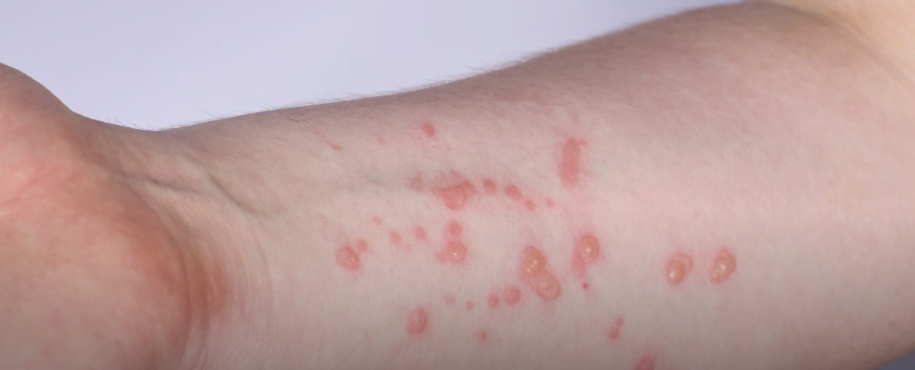
The next epidemic Monkeypox after COVID-19
- Monkeypox is a virus transmitted to humans from animals with symptoms similar to those seen in smallpox patients,

- It has emerged as the most important orthopox virus for public health.
- Monkeypox primarily occurs in central and west Africa, in proximity to tropical rainforests, and is increasing in urban areas.
- While Monkeypox has not technically been categorized as a sexually transmitted infection (STI), it looks and acts like a common STI and shares the same barriers to detection and treatment, including stigma and access to knowledgeable providers.
- Consider this: More than 2.5 million sexually transmitted infections were diagnosed in 2020, the last year with complete statistics. The ballooning rates touch people of every race, sexual orientation, and even age. Syphilis among newborns has increased 235% since 2016, and STIs like gonorrhea have reached historic highs among teens and adults.
– Source WHO
The Biden administration enlists Mayo Clinic for monkeypox testing push
- Mayo Clinic Laboratories will begin processing up to 10,000 monkeypox tests per week as the U.S. tries to track down infections and slow a mounting case totally.
- The Mayo Clinic’s Division of Clinical Microbiology laboratories in Rochester, Minnesota.
- “The ability of commercial laboratories to test for monkeypox is an important pillar in our comprehensive strategy to combat this disease,” CDC Director Rochelle Walensky said on 11th July’22. “This will not only increase testing capacity but also make it more convenient for providers and patients to access tests by using existing provider-to-laboratory networks.”
3 cases of monkeypox were reported in Davidson Co.
- Davidson County, the Metro Nashville Public Health Department, reported the first case of monkeypox on Thursday 7th July’22.
- Health department officials said the first case of monkeypox was discovered when the person came for treatment for a rash. That person had traveled the places with confirmed cases of monkeypox.
- Two more presumptive cases have been reported.
- The health department is awaiting confirmatory testing from the CDC on all three cases.
#AJStartHere | What is Monkeypox and should we be worried? | Start Here
The natural host of monkeypox virus
- Various animal species rope squirrels, tree squirrels, Gambian pouched rats, dormice, non-human primates, and other species have been identified as susceptible to the Monkeypox virus.
- Studies are required to identify the exact reservoir(s) and how virus circulation is maintained in nature.
- Monkeypox was first identified in humans in 1970 in the Democratic Republic of the Congo in a 9-month-old boy in a region where smallpox had been eliminated in 1968.
- Since then, most cases have been reported from rural, rainforest regions of the Congo Basin, particularly in the Democratic Republic of the Congo and human cases have increasingly been reported from across central and west Africa.
- Since 1970, human cases of Monkeypox have been reported in 11 African countries: Benin, Cameroon, the Central African Republic, the Democratic Republic of the Congo, Gabon, Cote d’Ivoire, Liberia, Nigeria, the Republic of the Congo, Sierra Leone, and South Sudan.
- In 1996–97, an outbreak was reported in the Democratic Republic of the Congo with a lower case fatality ratio and a higher attack rate than usual.
- Since 2017, Nigeria has experienced a large outbreak, with over 500 suspected cases and over 200 confirmed cases and a case fatality ratio of approximately 3%. Cases continue to be reported until today.
- In 2003, the first Monkeypox outbreak outside of Africa was in the United States of America and was linked to contact with infected pet prairie dogs.
- This outbreak led to over 70 cases of Monkeypox in the U.S. Monkeypox has also been reported in travelers from Nigeria to Israel in September 2018, to the United Kingdom in September 2018, December 2019, May 2021, and May 2022, to Singapore in May 2019, and to the United States of America in July and November 2021.
- In May 2022, multiple cases of Monkeypox were identified in several non-endemic countries. Studies are currently underway to further understand the epidemiology, sources of infection, and transmission patterns.
-Source WHO
Did monkeypox confirm in the U.S.?
Monkeypox Spreading in the U.S. and Around the World
Where Monkeypox Is Spreading In The U.S. And Around the World
Monkeypox Transmission
- Animal-to-human (zoonotic) transmission can occur from direct contact with the blood, bodily fluids, or cutaneous or mucosal lesions of infected animals.
- In Africa, evidence of Monkeypox virus infection has been found in many animals including rope squirrels, tree squirrels, Gambian poached rats, dormice, different species of monkeys, and others.
- The natural reservoir of Monkeypox has not yet been identified, though rodents are the most likely. Eating inadequately cooked meat and other animal products of infected animals is a possible risk factor. People living in or near forested areas may have indirect or low-level exposure to infected animals.
- Human-to-human transmission can result from close contact with respiratory secretions, skin lesions of an infected person, or recently contaminated objects.
-Source WHO
Signs and symptoms
The infection can be divided into two periods:
- The invasion period (which lasts between 0–5 days) is characterized by fever, intense headache, lymphadenopathy (swelling of the lymph nodes), back pain, myalgia (muscle aches), an intense asthenia (lack of energy). Lymphadenopathy is a distinctive feature of Monkeypox compared to other diseases that may initially appear similar (chickenpox, measles, smallpox)

- the skin eruption usually begins within 1–3 days of the appearance of fever. The rash tends to be more concentrated on the face and extremities rather than on the trunk.
- Monkeypox is usually a self-limited disease with symptoms lasting from 2 to 4 weeks.
- Complications of Monkeypox can include secondary infections, bronchopneumonia, sepsis, encephalitis, and infection of the cornea with ensuing loss of vision. The extent to which asymptomatic infection may occur is unknown.

- The case fatality ratio of monkeypox has historically ranged from 0 to 11 % in the general population and has been higher among young children. In recent times, the case fatality ratio has been around 3–6%.
-Source WHO
Monkeypox Vaccination
- Vaccination against smallpox was demonstrated through several observational studies to be about 85% effective in preventing monkeypox.
- Thus, prior smallpox vaccination may result in milder illness. Evidence of prior vaccination against smallpox can usually be found as a scar on the upper arm.
- At the present time, the original (first-generation) smallpox vaccines are no longer available to the general public.
- Some laboratory personnel or health workers may have received a more recent smallpox vaccine to protect them in the event of exposure to orthopoxviruses in the workplace.
- A still newer vaccine based on a modified attenuated vaccinia virus (Ankara strain) was approved for the prevention of monkeypox in 2019.
-Source WHO
- New York City is making the monkeypox vaccine available to more people as the number of cases continues to increase in the U.S. Now, groups of at-risk men who have had multiple male sex partners, or anonymous sex in the past two weeks, are eligible to receive a dose. Dr. Celine Gounder, the editor-at-large for public health at Kaiser Health News and an infectious disease expert and epidemiologist at the NYU Grossman School of Medicine and Bellevue hospital, has more on what health officials are doing to combat the spread.
New York City expanding access to the monkeypox vaccine as the virus spreads across the U.S.
CDC issues new monkeypox warning as more potential cases found
#ABCNLUpdate #Symptoms #Concerns
Concerns over monkeypox in the United States
Monkeypox Prevention
- Raising awareness of risk factors and educating people about the measures they can take to reduce exposure to the virus is the main prevention strategy for monkeypox.
- Scientific studies are now underway to assess the feasibility and appropriateness of vaccination for the prevention and control of monkeypox.
- Some countries have or are developing, policies to offer vaccines to persons who may be at risk such as laboratory personnel, rapid response teams, and health workers.
-Source WHO
Monkeypox Key facts: as per WHO

- Vaccines used during the smallpox eradication program also provided protection against monkeypox. Newer vaccines have been developed of which one has been approved for the prevention of monkeypox
- Monkeypox is caused by the monkeypox virus, a member of the Orthopoxvirus genus in the family Poxviridae.
- Monkeypox is usually a self-limited disease with symptoms lasting from 2 to 4 weeks. Severe cases can occur. In recent times, the case fatality ratio has been around 3–6%.
- Monkeypox is transmitted to humans through close contact with an infected person or animal, or with material contaminated with the virus.
- Monkeypox virus is transmitted from one person to another by close contact with lesions, body fluids, respiratory droplets, and contaminated materials such as bedding.
- Monkeypox is a viral zoonotic disease that occurs primarily in tropical rainforest areas of central and west Africa and is occasionally exported to other regions.
- An antiviral agent developed for the treatment of smallpox has also been licensed for the treatment of monkeypox.
- The clinical presentation of monkeypox resembles that of smallpox, a related orthopoxvirus infection that was declared eradicated worldwide in 1980. Monkeypox is less contagious than smallpox and causes less severe illness.
- Monkeypox typically presents clinically with fever, rash, and swollen lymph nodes and may lead to a range of medical complications.
Emergency Committee : WHO
Meeting of the International Health Regulations (2005) Emergency Committee regarding the multi-country monkeypox outbreak

WHO considers declaring a public health emergency
#GlobalNews #WHO Monkeypox: WHO considers declaring public health emergency in closed-door debate
WHO: Is Monkeypox a Public Health Emergency?
#WHO #PublicHealth WHO Meets To Determine If Monkeypox Is A Global ‘Public Health Emergency’
IHR Emergency Committee regarding the multi-country outbreak of monkeypox
